Ujjayi: The Ocean in Your Throat
Summary
A soft narrowing at the back of the throat turns every breath into a slow wave. How to find Ujjayi, how to practise it, and what it opens.
Close your eyes and listen to someone breathing in Ujjayi and you will hear the sea. A slow wave rolling in, a slow wave rolling out.
That sound is the whole practice. It is made by a gentle narrowing at the back of the throat, and once you find it, it becomes an anchor you can carry anywhere - onto the mat, into meditation, into a crowded room.
What it is
Ujjayi (oo-JAI-ee) is usually translated as the "victorious" breath. It is one of the classical pranayamas of Hatha Yoga and the quiet backbone of many other practices, from flowing asana to Kriya and Kundalini work.
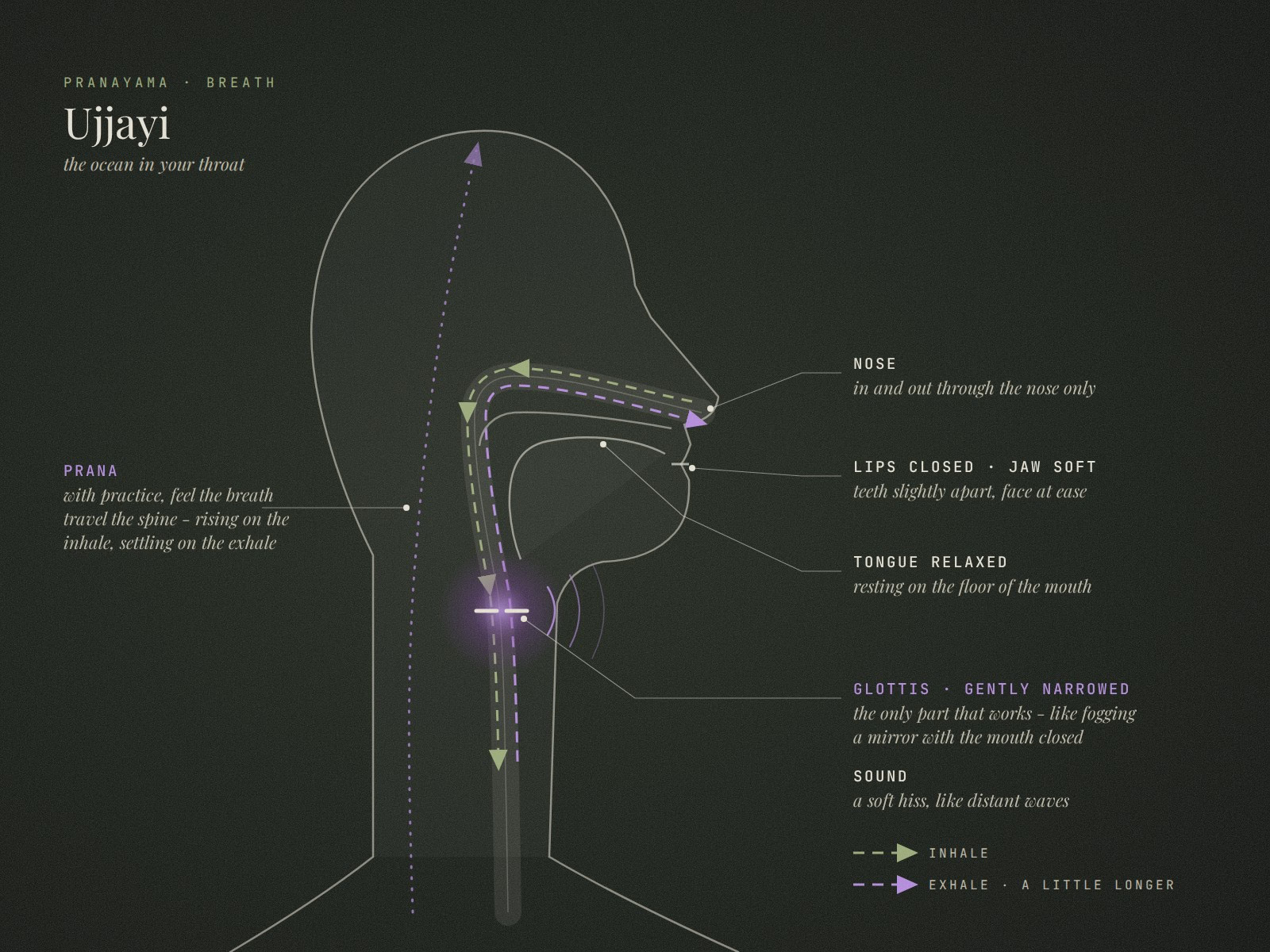
Technically it is simple: you slightly close the glottis - the space around your vocal cords - and breathe through the nose. The air meets a little resistance, slows down, and makes a soft, hollow sound.
Why work with it
It slows you down. The resistance in the throat naturally lengthens each breath, especially the exhale. For most people, long slow exhales are one of the fastest ways out of stress and back into the body.
It gives the mind something to hold. Thoughts drift, the sound stays. Every time you notice you have wandered, the wave is still there to come back to.
It builds heat. Traditionally Ujjayi is said to warm the body from the inside - you will often feel it after a few minutes.
It is a doorway. Many deeper practices, including Kriya Yoga, are built on top of this breath. Learn it well and a lot opens up later.
How to find it
Sit comfortably with a long spine. Soften the jaw, the tongue, the shoulders.
Open your mouth and exhale as if you were fogging up a mirror - a soft "haaa". Notice the slight squeeze at the back of the throat.
Do it a few more times. Then close your mouth and keep exactly that throat shape as you exhale through the nose. The "haaa" becomes a quiet rushing sound.
Now keep the same gentle narrowing on the inhale. In and out through the nose, the sound like distant waves.
If you cannot find it straight away, that is normal. Go back to the open-mouth "haaa" and try again. It usually clicks within a few breaths.
A five minute practice
Sit, close your eyes, and begin breathing in Ujjayi.
For the first minute, count: in for 4, out for 6. Let the exhale be a little longer than the inhale.
Then let the counting go. Just listen. Ride the wave in, ride the wave out.
After five minutes, release the throat, breathe naturally, and sit for a few moments noticing how you feel.
The sound should be audible to you, perhaps to someone sitting right next to you - not to the whole room.
Common traps
Squeezing too hard. If your throat feels tight or you get a headache, you are working too much. Soften by half.
Chasing volume. Louder is not deeper. Aim for smooth and even.
Holding tension elsewhere. Check the face, jaw and shoulders. Only the throat does the work.
Holding the breath. Let the inhale turn into the exhale like a wave turning at the shore - no hard stop.
Taking it further
Once Ujjayi feels natural, bring it with you. Breathe this way through slow movement, in the pause before sleep, or whenever the day gets loud. Later it becomes the ground for deeper pranayama and Kundalini kriyas.
A note of care
If you feel dizzy or light-headed, stop and return to normal breathing. If you are pregnant, have high blood pressure, a heart condition or a respiratory condition, keep the breath very soft and check with your doctor first. This practice supports your wellbeing - it does not replace medical care.
Presence, above all.
Notes from the way, straight to your inbox.
New insights, music and practices. Only when something is ready.